I’ll be at Winter Institute Feb. 22-25; stop by and say hi if you are there. (Also, we will have super cool swag.)
Belt is hosting an off-site happy hour at AWP! Join us on March 5 at Checkerspot Brewery at 7:30.
I’m teaching a one week book proposal course in March (cheaper!), and the two week version in July (longer!)
The shuttering of the Washington Post book review staff is wrenching, mainly for the individuals involved. It also seems to be the proverbial straw/camel, unleashing a thousand takes on the end of the traditional book review/legacy media reviewing ecosystem (by one count, there are four full time book reviewers left?). There are plenty of ways to analyze this: are newspapers the venue for book reviews anyway, dwindling readership, the cynicism and weaknesses of the era we are now eulogizing, etc.
I have tons of thoughts about all of this! Belt was founded upon the idea that a niche is always preferable to books “for everybody,” and this meant that we always expected to receive less interest from national review outlets as a result— but in return we would receive increased interest from those who are part of and invested in that niche, be they traditional or not, especially because the niche is oft-overlooked by national outlets. We also always focused on creating a community amongst readers, for much the same reasons: people who understood our niche, felt it important, became part of what we do. We used to have memberships and book clubs and events and all sorts of fun ways to help this community cohere, and introduce folks to each other. General (not books-specific) local journalism, especially public radio, and word of mouth have always been our most reliable and sales-getting outlets for media, not newspaper reviews.
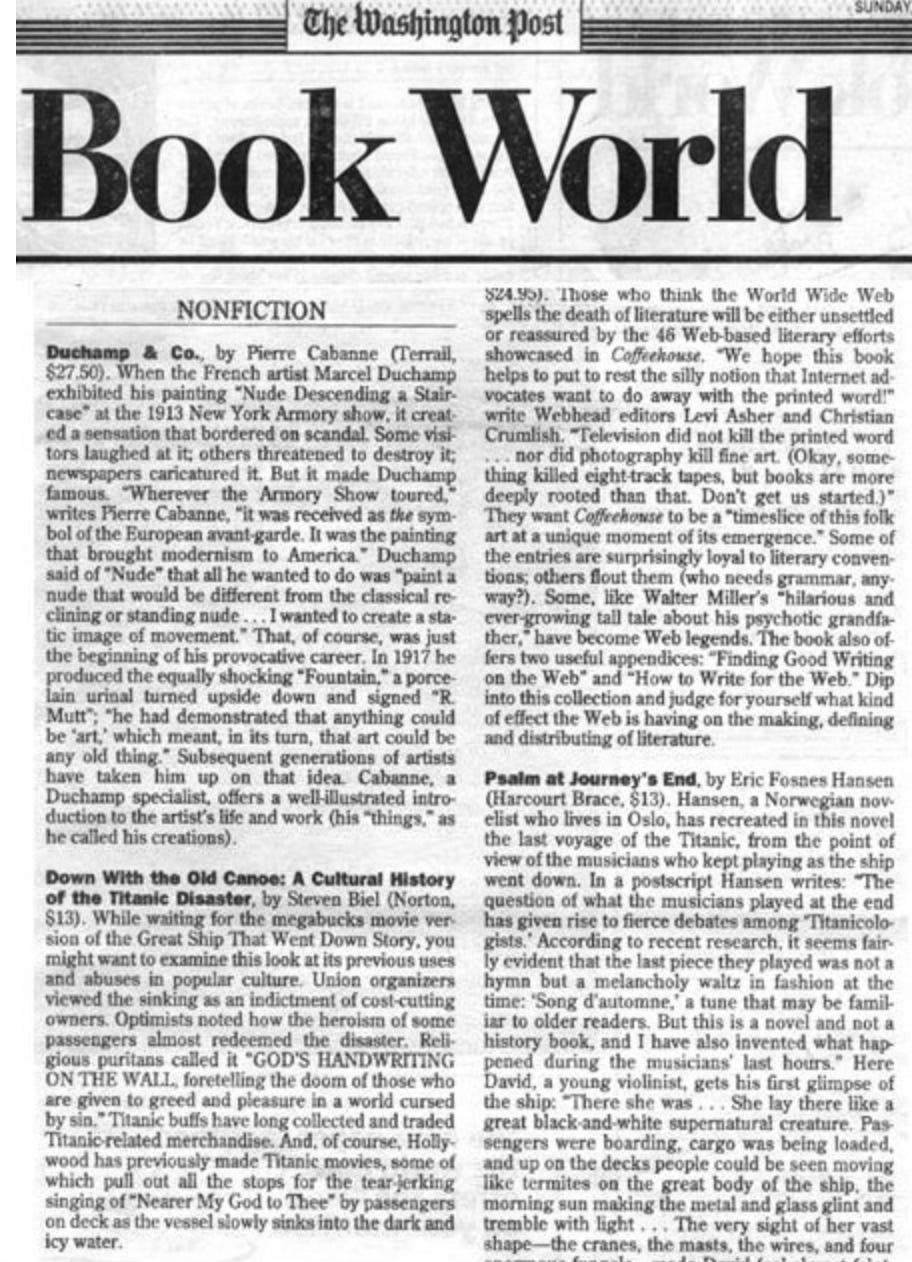
But what I’ve been thinking about this week are the strengths of the generalist book review, which I do agree will be increasingly something of the past, soon to be of a period future scholars will analyze. I’m referring here only to the sorts of reviews that appear(ed) in newspaper and magazine review sections, usually about 500-1000 words. Two strike me as extremely important:
They are oriented to the reader. When I wrote book reviews (which I loved doing and did quite often, for newspapers and magazines), this was always top of my mind. It is a form of service journalism: you are letting readers know if they should read this book or not. Just like Wirecutter! I really enjoyed this aspect of the genre. I do not think the longer reviews published by, say, established outlets like The New York Times Book Review, or newer ones like the Substack-centered The Metropolitan Review, have service to the reader as their driving raison d’être. Let’s call those pieces criticism as opposed to reviewing. Whether or not a reader of the piece should buy/borrow the book under discussion isn’t a central concern of the critic. But that focus on the reader of the piece is something I appreciate in generalist reviews and I hope we don’t lose going forward.
Form is enabling. The strict word count for reviews is a core aspect of the genre. Sonnets are 14 lines long; pop songs are three minutes; book reviews are 800 words. This restriction is so key: it forces the writer to be economical, to structure the review carefully, to attend to word choice. In turn, readers learn to expect certain moves, and know what they are getting into when they start a review. Like any genre, these conventions and expectations are core to the work, plus they are fun to play within.
Pre-publication book reviews—those published by Kirkus, Publishers Weekly, and the like still adhere to these strictures—their reviews are often even shorter— and hooray for them. They are adamantly focused on the reader, who in this case is often a representative of an account: a buyer for a library, say, or a bookstore. So too do the Briefly Noted squibs in the New Yorker, and other places stick to shorter is better. But the internet, analogized by the infinite scroll, makes enforcing borders (ack) seem silly. But it’s not. Generic conventions foster good will between writer and reader.
The (too many) laid off book reviewers and book review editors knew that being of service to readers, and keeping the writing short and tight, were key. While there is plenty of room for longer, looser, voice-ier, writer-centered criticism—of which we have lots of now, and I expect will have even more of going forward—I’m going to be keeping an eye out for those who write and publish reviews focused on the reader and the form.